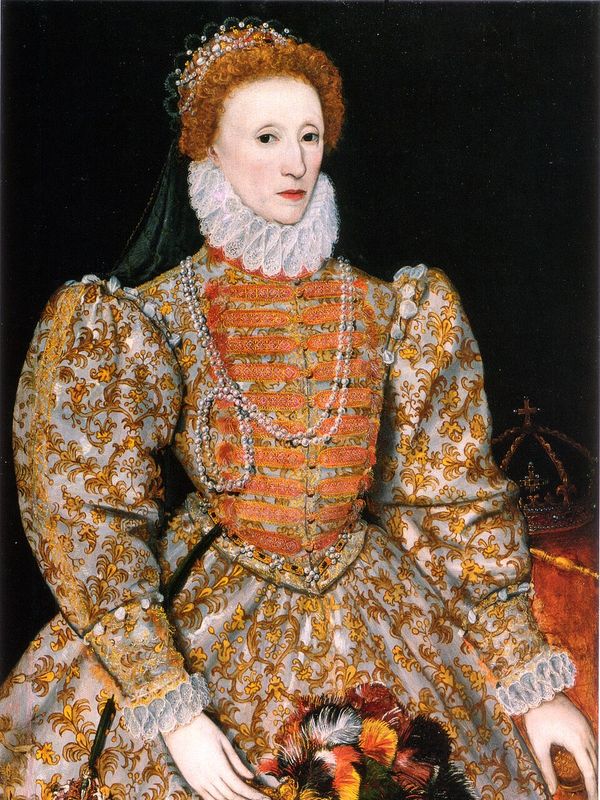
Mary, Queen of Scots, and Elizabeth I of England were cousins, rivals, and reigning queens at the same time. They never once met. This opera imagines the day they did.
Where
The Metropolitan Opera, Lincoln Center
When
December 2026
Language
Italian, with English titles on the seat in front of you
Shape
Two acts with one intermission
This guide
About fifteen minutes to read. Use the strip above to jump around, and A+ to make the text bigger.
The story in one minute
Two queens, one throne
England, 1587. Mary Stuart, the deposed Queen of Scotland, has been her cousin's prisoner for nineteen years. Catholic Europe says Mary is the rightful Queen of England. Elizabeth's ministers want her dead. Elizabeth cannot make up her mind.
Mary's last hope is to meet her cousin face to face and ask for mercy. The Earl of Leicester, the man Elizabeth loves, arranges it. In the opera he is in love with Mary, which does not help.
Mary kneels. Elizabeth taunts her. Mary finally snaps and calls the Queen of England a bastard to her face.
That outburst seals her fate. Elizabeth signs the death warrant. Mary spends her last hours in prayer, forgives her cousin, and walks calmly to the scaffold.
Who they really were
The two queens
1542 to 1587 · Queen of Scots
Mary Stuart
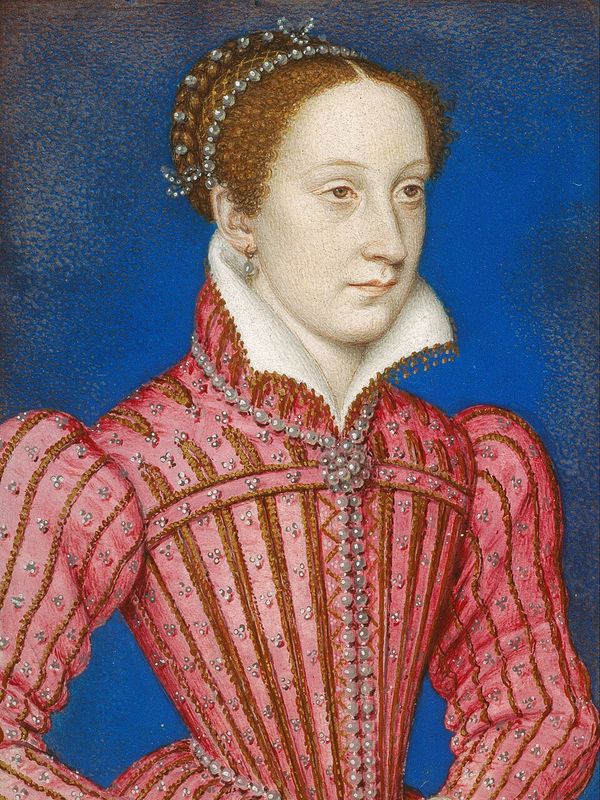
In FranceAround age sixteen, by François Clouet
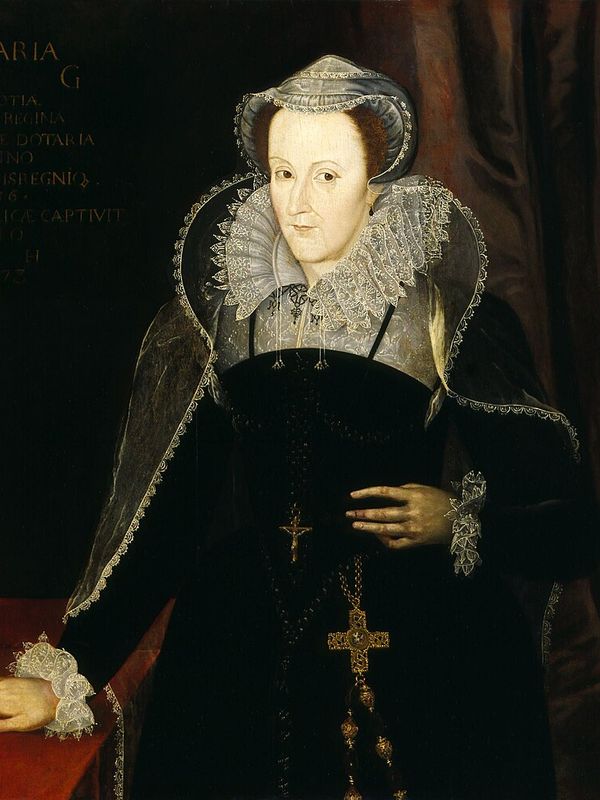
In captivityAbout 1578, after Nicholas Hilliard
Became queen when she was six days old, after her father died.
Raised at the glittering French court from age five. At seventeen she was briefly Queen of France as well.
A devout Catholic who came home at eighteen to rule a country that had just turned Protestant.
Three marriages, two murders around her, and one son, James.
In 1568 she fled to England expecting her cousin's help. She never left.
“En ma fin est mon commencement.”
“In my end is my beginning.” Mary stitched this motto into her embroidery during her captivity.
1533 to 1603 · Queen of England
Elizabeth Tudor
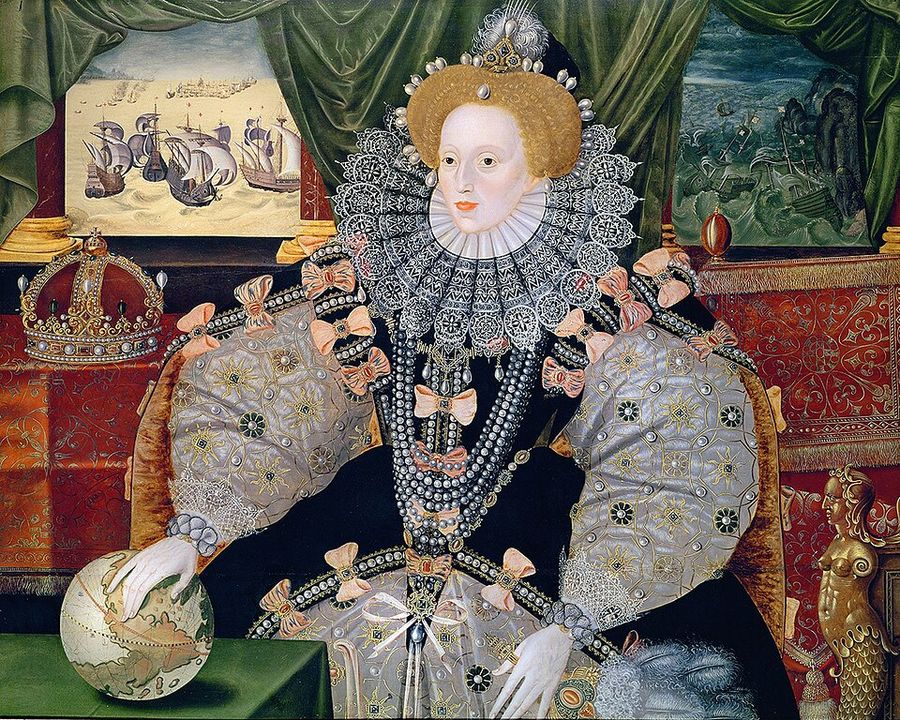
The Armada PortraitPainted about 1588, the year after Mary's death. Her hand rests on the globe.
Daughter of Henry VIII and Anne Boleyn, who was beheaded when Elizabeth was two.
Declared illegitimate as a child. Many Catholics never stopped seeing her that way.
Became queen at twenty-five. Never married. Reigned forty-four years.
Protestant. The Pope excommunicated her in 1570, which made plotting against her look like a religious duty to some Catholics.
Kept Mary alive for nineteen years, partly because killing an anointed queen set a dangerous example for her own safety.
Why Mary was so dangerous
Mary was Henry VII's great-granddaughter and next in line for the English throne. If Elizabeth was illegitimate, as the Catholic Church held, then Mary was already the true Queen of England. Almost every plot against Elizabeth for two decades had Mary's name on it.
How they were related
The family tree
Elizabeth's father and Mary's grandmother were brother and sister. That makes them first cousins once removed, and both of them Tudors.
Henry VIIKing of England 1485 to 1509
Henry VIIIhis son
Elizabeth Ino children
Margaret Tudorhis daughter, married the King of Scots
James V of Scotland
Mary, Queen of Scots
JamesKing of Scotland, then of England too
When Elizabeth died in 1603, the crown went to Mary's son.
Who's who on stage
The characters
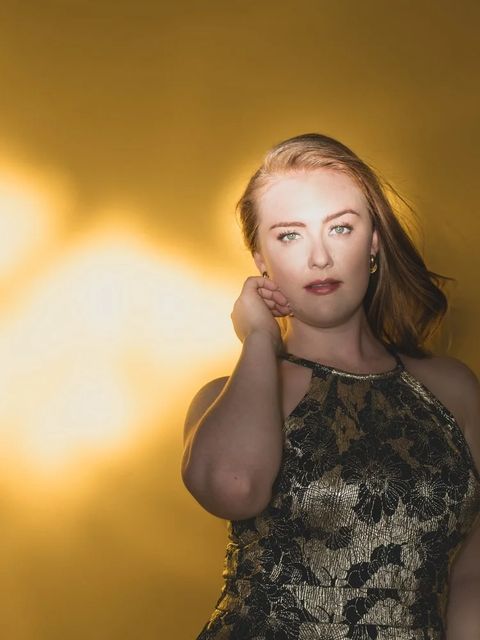
On the left, the real person. On the right, the singer the Met has announced for this run. Casts can change for individual performances.
Maria Stuarda
Soprano
Mary StuartAbout 1578
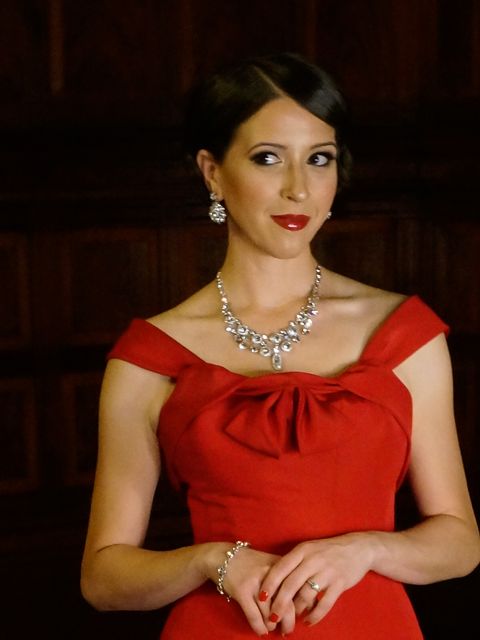
Lisette OropesaSoprano
On stage
Proud, wronged and deeply religious. The heart of the evening, and the role with the most to sing.
In life
By 1587 Mary was forty-four and in poor health after years of confinement, not the young beauty of most productions.
Elisabetta
Soprano
Elizabeth IAbout 1575
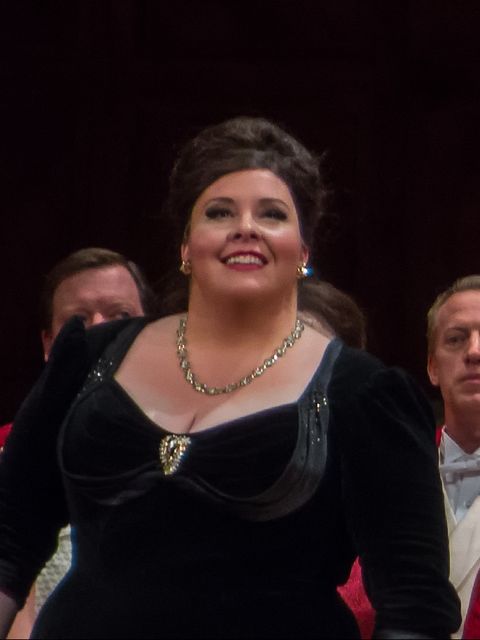
Angela MeadeSoprano
On stage
Torn between pity, jealousy and fear. The more complicated of the two queens, and in some ways the lonelier.
In life
Famous for putting off hard decisions. She signed Mary's death warrant and then claimed it had been sent without her permission.
Roberto, Earl of Leicester
Tenor
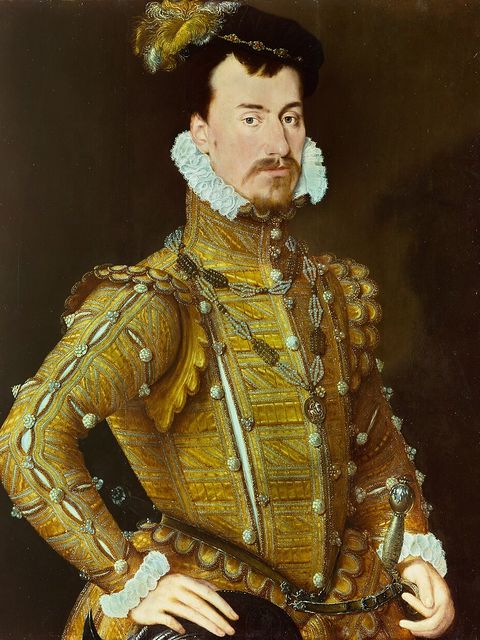
Robert DudleyEarl of Leicester
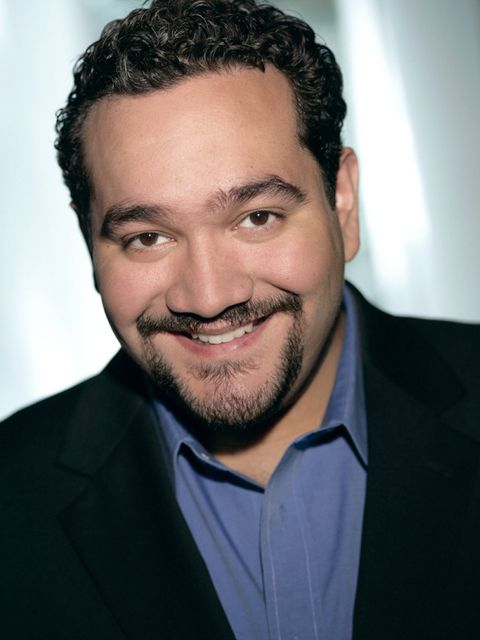
René BarberaTenor
On stage
Elizabeth's favourite, secretly in love with Mary, and desperate to save her.
In life
Robert Dudley really was Elizabeth's lifelong favourite. He had no romance with Mary. In fact, in 1564 Elizabeth offered him to Mary as a husband, and Mary turned him down.
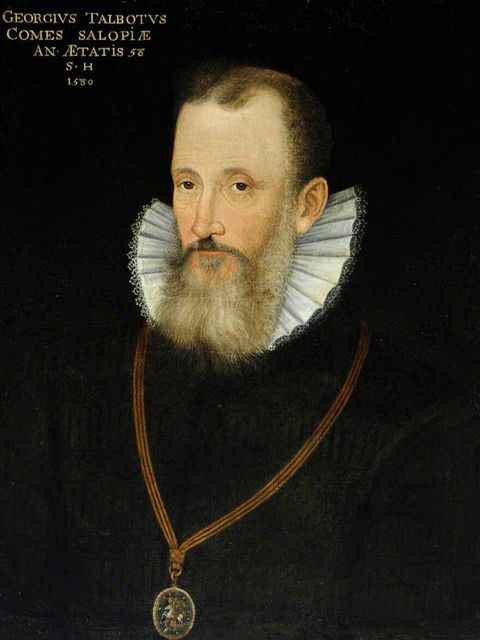
Giorgio Talbot
Bass
George TalbotEarl of Shrewsbury, 1580
Adolfo CorradoBass
On stage
Mary's kind keeper and friend, who hears her final confession.
In life
George Talbot, Earl of Shrewsbury, guarded Mary for about fifteen years. He was a Protestant and was present at her execution.
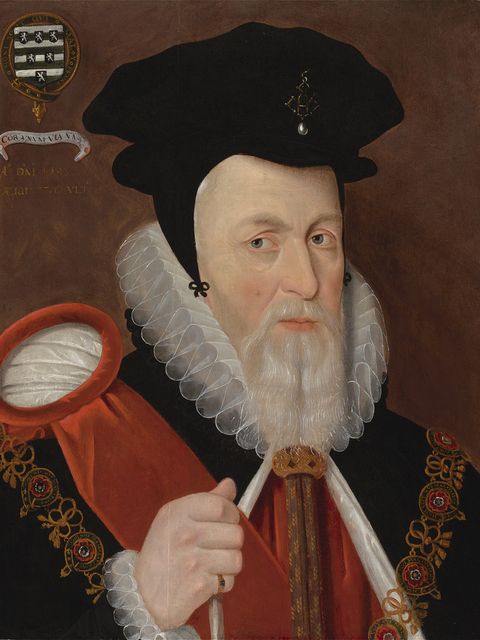
Lord Cecil
Baritone
William CecilLord Burghley
Mihai DamianBaritone
On stage
The hard-liner who keeps telling Elizabeth that Mary must die.
In life
William Cecil, Lord Burghley, was Elizabeth's chief minister for forty years and did push for the execution, along with her spymaster Francis Walsingham, who does not appear in the opera.
Anna Kennedy
Mezzo-soprano
No portrait of Jane Kennedy survives
Jane KennedyMary's attendant
Meridian PrallMezzo-soprano
On stage
Mary's old nurse and faithful companion.
In life
Based on Jane Kennedy, one of the two women who went to the scaffold with Mary. She tied Mary's blindfold.
What actually happened
Mary's life, year by year
1542
Mary is born at Linlithgow Palace near Edinburgh. Six days later her father dies and she is Queen of Scots.
1548
Sent to France at five, to be raised alongside the boy she is to marry.
1558
Mary marries the French heir, Francis. The same year, Elizabeth becomes Queen of England.
1559
Francis becomes King of France. Mary's household uses the royal arms of England on her badges, a claim to Elizabeth's throne that Elizabeth never forgot.
1560
Francis dies. Mary is a widow at eighteen.
1561
She sails home to rule Scotland.
1565
Marries her handsome, reckless cousin Henry, Lord Darnley.
1566
Darnley and a gang of nobles murder Mary's secretary, David Rizzio, in front of her. Months later she gives birth to their son, James.
1567
Darnley's house is blown up and he is found strangled in the garden. Three months later Mary marries the chief suspect, the Earl of Bothwell. Scotland rebels, and she is forced to give up the crown to her one-year-old son.
1568
She escapes, loses one last battle, and crosses into England to ask Elizabeth for help. She becomes a prisoner instead.
1568to 1586
Nineteen years moved between castles and country houses, always under guard, while plots to free her come and go.
1586
The Babington Plot. Secret letters are smuggled to Mary in beer barrels, and Walsingham's codebreakers read every one. Her reply approving the plan becomes the evidence against her.
1586October
Tried at Fotheringhay Castle and found guilty of plotting Elizabeth's death.
15871 February
After months of delay, Elizabeth signs the death warrant.
15878 February
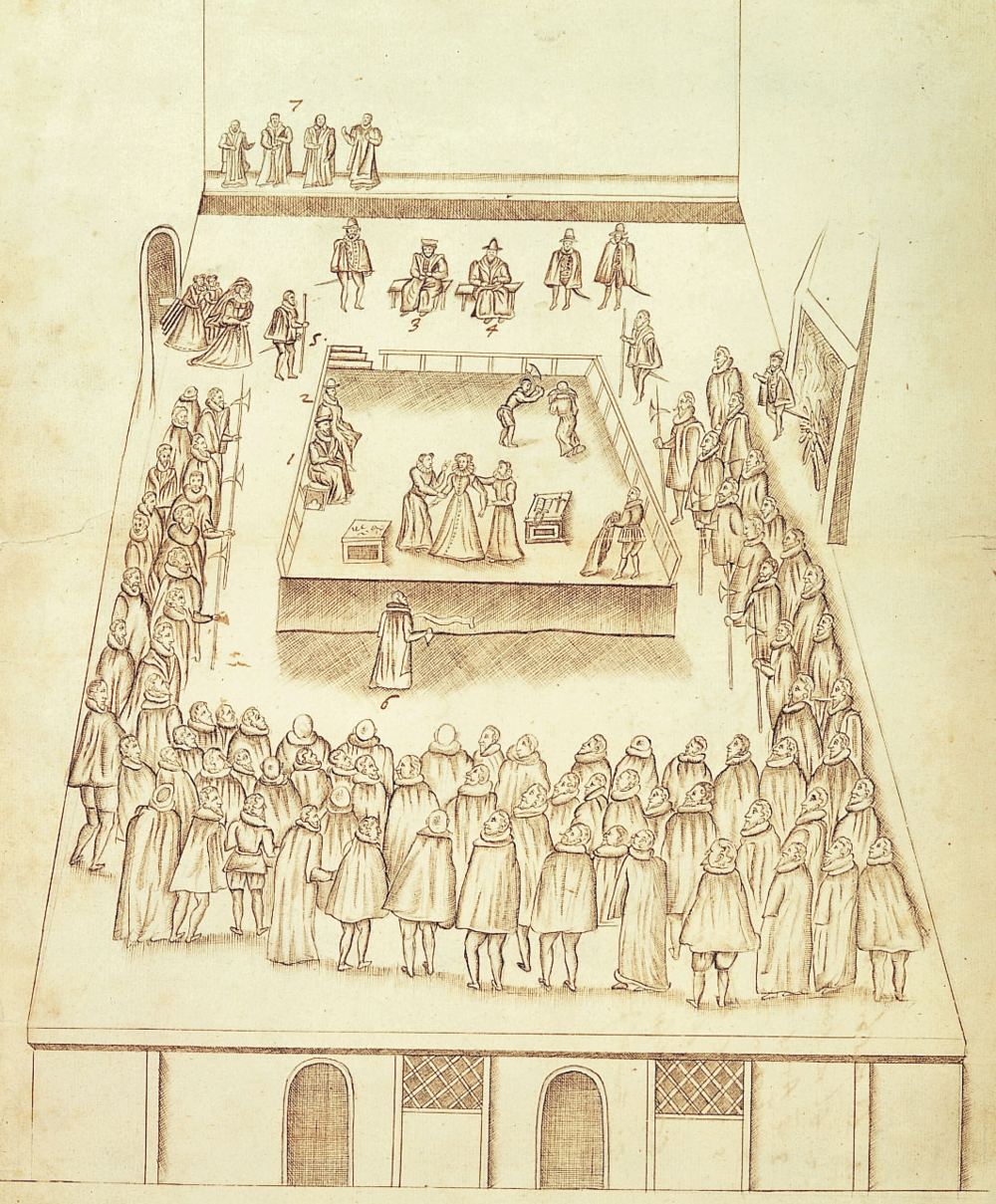
Mary is executed in the great hall at Fotheringhay. When her black gown was removed she was dressed in deep red, the Catholic colour of martyrdom. Her little dog was found hiding in her skirts.
An eyewitness drawingThe hall at Fotheringhay, sketched by Robert Beale, the official who carried the death warrant there.
1603
Elizabeth dies without children. Mary's son becomes King James I of England. The throne Mary died for passes to her family after all.
1612
James moves his mother's body to Westminster Abbey. Today Mary and Elizabeth lie in the same chapel, a few steps apart.
What you'll see
The opera, scene by scene
Act One
Westminster Palace, London
Elizabeth's court
The court is celebrating news that the King of France wants to marry Elizabeth. She is noncommittal, and hints that her heart belongs to someone else. Courtiers beg her to show mercy to Mary. Cecil tells her Mary must die.
Talbot slips Leicester a letter and a portrait from Mary, begging him to arrange a meeting with the Queen. Leicester promises to help. Elizabeth sees how he talks about Mary and is stung with jealousy, but she agrees to the meeting.
Listen for Elizabeth's first aria. She sings about a love she cannot have. That love is Leicester.
The park at Fotheringhay Castle
The meeting
Mary is allowed outdoors for once. She watches the clouds drifting south toward France, where she was happy, and asks them to carry her love there.
“O nube! che lieve per l'aria ti aggiri”
“O cloud, drifting lightly through the air”
Hunting horns sound. Elizabeth is arriving. Leicester begs Mary to be humble. She kneels and asks for mercy, and Elizabeth answers with mockery about Mary's dead husbands and her “virtue.” Mary rises and lets fly the most famous insult in opera.
“Figlia impura di Bolena… vil bastarda!”
“Impure daughter of Boleyn… vile bastard!”
Guards drag her away. Elizabeth has her answer.
Intermission
Act Two
Westminster Palace
The warrant
Elizabeth stares at the death warrant. Cecil urges her to sign. Leicester rushes in to plead for Mary, and his pleading only makes Elizabeth angrier. She signs, and orders Leicester to watch the execution himself.
Mary's rooms at Fotheringhay
The confession
Cecil reads Mary her sentence. Alone with Talbot, she makes her confession and is haunted by visions of Darnley and Rizzio. Asked about the plot against Elizabeth, she swears she is innocent of it.
A hall beside the scaffold
The last prayer
Mary's servants gather in grief. She leads them in a prayer that builds into the great ensemble of the night.
“Deh! Tu di un'umile preghiera il suono odi”
“Hear the sound of a humble prayer”
A cannon signals the hour. Mary forgives Elizabeth, prays for England, says goodbye to Leicester, asks Anna to walk with her, and goes out to die. The opera ends there, before the scaffold.
Tap each one to see
Fact or fiction?
Mary and Elizabeth met face to face.Tap
Fiction
They never met. Mary asked again and again; Elizabeth always refused. The German playwright Friedrich Schiller invented the meeting in 1800, and Donizetti kept it because it is too good a scene to lose.
Mary called Elizabeth a bastard.Tap
Half true
Never to her face, since they never met. But the idea behind it was real: the Catholic Church did not recognise Henry VIII's marriage to Anne Boleyn, so to Catholics Elizabeth was illegitimate.
Leicester was in love with Mary.Tap
Fiction
He was Elizabeth's man through and through. The real twist is stranger: Elizabeth once proposed Leicester as Mary's husband, possibly to keep Mary under her control.
Elizabeth agonised over the death warrant.Tap
Fact
She delayed for months. After the execution she claimed the signed warrant had been sent off without her permission, and she had her secretary, William Davison, locked in the Tower of London.
Talbot heard Mary's last confession.Tap
Fiction
The real Talbot was a Protestant nobleman. Mary was refused a Catholic priest at the end. She spent her last night writing letters and praying.
Mary really did plot to kill Elizabeth.Tap
Still argued
Her letter approving the Babington Plot is real, but it was intercepted, and Walsingham's codebreaker added a forged postscript to it. Historians still debate how much Mary knew and agreed to.
Behind the scenes
The opera's own drama
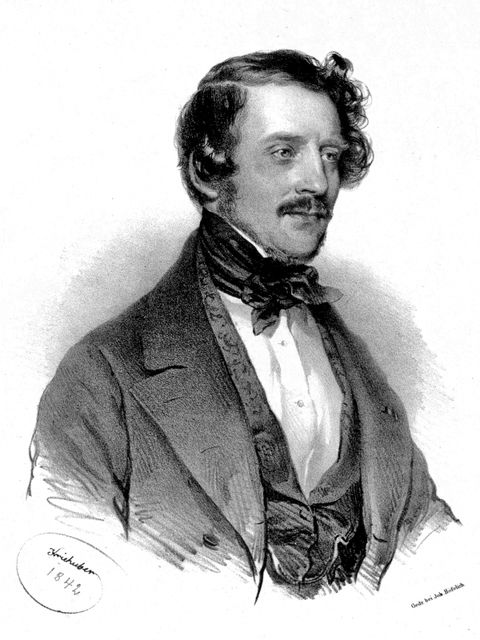
Gaetano DonizettiThe composer, in 1842
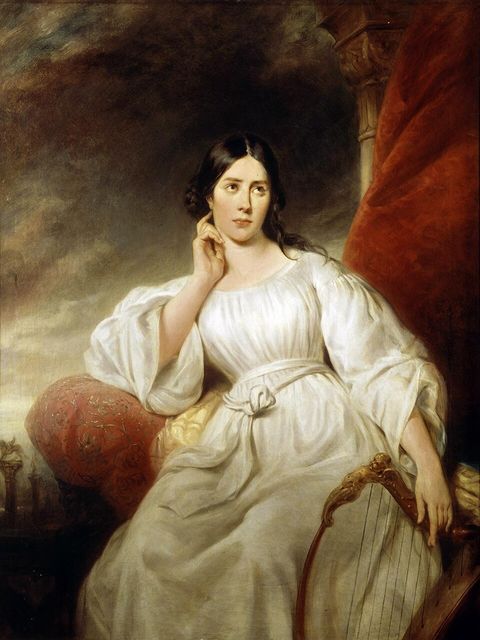
Maria MalibranThe first Mary, 1835
A play first. The opera is based on Friedrich Schiller's play Maria Stuart (1800), still a classic of German theatre. The Italian text was written by Giuseppe Bardari, a seventeen-year-old law student.
A fight in rehearsal. In Naples in 1834, the two sopranos playing the queens took the insults personally and came to blows on stage. Then the King of Naples banned the opera outright. Donizetti hastily moved the music into a different story so it would not go to waste.
A star defies the censors. The real premiere came at La Scala in Milan on 30 December 1835, with the great Maria Malibran as Mary. She was ill, and she sang the forbidden “vil bastarda” anyway. The authorities shut it down after a handful of performances.
A long silence. The opera all but vanished for over a century, until a revival in Donizetti's home town of Bergamo in 1958. It has been a favourite of great sopranos ever since.
New to the Met. The Metropolitan Opera did not stage it until New Year's Eve 2012, in the same David McVicar production you will see.
Part of a trilogy
Donizetti wrote three operas about the Tudor court. Anna Bolena is about Elizabeth's mother, Anne Boleyn. Maria Stuarda is this one. Roberto Devereux shows Elizabeth as an old woman, and her last favourite, the Earl of Essex. That is why Mary's insult, “daughter of Boleyn,” cuts so deep.
What to listen for
A few words about the music
Bel canto
Italian for “beautiful singing.” Operas of this era are built for the human voice: long, floating melodies, and fast runs and high notes that show off a singer's control.
Recitative
The sung conversation between arias, where the plot moves forward.
Aria
A song where the story stops and one character's feelings fill the stage. Big arias here often come in two parts: a slow, heartfelt section, then something happens, and a fast, brilliant section follows.
The repeat
The fast section is usually sung twice. The second time, the singer adds her own decorations. Listen for what changes.
Two sopranos
Both queens are sopranos in this production. Listen for how differently the two voices sound, especially when they finally sing against each other in the park.
Practical things
Your night at the Met
Performance
Curtain
Sunday 6 December
3:00 pm
Wednesday 9 December
7:30 pm
Saturday 12 December
1:00 pm
Wednesday 16 December
7:30 pm
Saturday 19 December
8:00 pm
Tuesday 22 December
7:30 pm
Translations. There is a small screen on the back of the seat in front of you. It shows the words in English, and you can switch it off if you prefer just to listen.
The chandeliers. Just before the music starts, the crystal chandeliers rise slowly to the ceiling. That is your cue to settle in.
Arrive early. Latecomers are held outside until a suitable break, so plan to be in your seat a few minutes before curtain.
Clapping. It is normal to applaud after a big aria. Opera fans shout “Brava!” for a woman and “Bravo!” for a man.
What to wear. There is no dress code. You will see everything from jeans to evening gowns.